Blog

  • 7 Ways to Boost the Effectiveness of Your Print Marketing Collateral

    7 Ways to Boost the Effectiveness of Your Print Marketing Collateral

    Print marketing is far from obsolete. When executed thoughtfully, it can create a lasting tactile impression that digital mediums cannot touch. To truly make an impact, your print collateral needs to stand out, engage, and connect with your audience. Here are some key strategies to enhance your print marketing effectiveness for deeper engagements with your audience.

    1. Embrace Sustainability

    Sustainability is not just a trend; it’s a responsibility. More and more consumers are making purchasing decisions based on a company’s environmental practices. According to a Nielsen report, 73% of global consumers say they would “definitely” or “probably” change their consumption habits to reduce their environmental impact. Integrating sustainable practices into your print marketing can significantly boost your brand’s appeal. Position your business as a leader in sustainable practices by utilizing vendors with eco-friendly printing processes and options that align your brand with environmental responsibility:

    • Use Recycled Materials: Opt for print partners that offer recycled paper and soy-based inks. These choices reduce your environmental footprint and resonate well with eco-conscious consumers. Recycled paper offers a high-quality finished product. Soy-based inks are a renewable resource that reduces harmful VOC emissions.
    • Certifications Matter: Look for FSC (Forest Stewardship Council) certified paper to ensure your materials come from responsibly managed forests. FSC certification is recognized globally as a mark of responsible forestry, assuring your audience that your brand is committed to sustainability.

    Consumer demand is dictating that products and packaging be made from environmentally friendly, sustainable, and recyclable materials. When your company invests in producing marketing collateral that protects natural resources and contributes to a greener planet, you’ll be letting your customers know that their concerns matter. 

    2. Experiment with Unique Folds and Finishes

    Printed material engages not only with visual design, but also connects with consumers through the sense of touch. Use unique folds and specialty finishes to elevate your marketing piece by establishing quick emotional attachments and the full attention of your audience.

    • Innovative Folds: Techniques such as gatefolds, accordion folds, tip-ons and pop-ups can capture attention and encourage interaction. With the help of Marketing.com’s efficient equipment, we can fold, convert, glue, tip-on and finish in a single pass!
    • Special Finishes: Embossing, debossing, foil stamping, and spot UV coating add a premium feel to your print materials, enhancing perceived value. Embossing and debossing create a raised or recessed effect, adding texture and depth. Foil stamping adds a metallic sheen that catches the light, making your design stand out. Spot UV coating applies a finish to specific areas, creating a contrast with the background and drawing attention to key elements. Adding elements such as soft-touch or lamination provide another tactile feature, enhancing interaction with your piece.
    • Die Cut: A versatile technique that involves cutting materials into custom shapes and designs using a steel cutting die. This process can create intricate and unique designs that make your marketing collateral stand out. Die cutting can enhance the visual appeal of your materials by creating intricate patterns, unique edges, or layered effects. 

    3. Utilize Direct Mail Campaigns

    Direct mail remains a powerful and effective strategy for engaging prospects and customers, driving website traffic, and enhancing marketing efforts throughout the customer journey. With 71% of consumers eagerly anticipating their daily mail, its relevance is undeniable. Here’s how businesses can leverage direct mail:

    • Acquisition: Direct mail is particularly effective in converting prospects into customers. By understanding buyer personas, both B2B and B2C companies can use actionable consumer data to identify and segment audiences. This targeted approach ensures that direct mail pieces offer real value, increasing the likelihood of conversion.
    • Loyalty: Direct mail fosters customer trust and builds loyal communities of repeat customers. It establishes brand familiarity and, with interactive print innovations like QR codes, can deliver personalized incentives based on customer habits and experiences.
    • Remarketing: Direct mail is an efficient method for retargeting and reengaging audiences. Businesses can automate their direct mail campaigns to send timely reminders, keeping their brand top-of-mind while the initial experience is still fresh.
    • Expanded Audiences: With a clear understanding of their target customers, businesses can leverage machine learning and customer data optimization through platforms like GoogleAds and Facebook Advertising. This approach creates lookalike audiences that share traits and behaviors with existing customers, leading to more relevant and effective ad targeting. The result is a greater ROI, improved cost-per-click (CPC), and an expanded customer base.

    4. Personalization and Variable Data Printing

    Personalization is key to making your audience feel valued. Variable Data Printing (VDP) allows you to customize each piece of collateral with unique information tailored to the recipient. Combined with print on demand (POD), you experience the benefit of adding variable elements to your marketing material and printing the items as needed. From a basic personalization of a recipient’s name to utilizing data about likes, past purchases, or interactions with your company, the personalization options are endless.

    • Tailored Messages: Personalized messages can improve response rates significantly. For example, including the recipient’s name or customized offers based on their past behavior can create a more personal connection. According to a study by Epsilon, 80% of consumers are more likely to make a purchase when brands offer personalized experiences.
    • Segmented Campaigns: Use VDP to segment your audience and create different versions of your collateral, ensuring each group receives the most relevant information. Segmentation can be based on demographics, purchase history, or other criteria, allowing you to target your messaging more effectively.

    5. Explore Fun Packaging Ideas with Custom Mailer Boxes

    Are you looking for an easy way to leave a lasting impression on your audience? A custom mailer box is the perfect solution. The most innovative brands are leveraging custom mailer boxes to set themselves apart throughout the customer journey. Custom mailer boxes are a powerful marketing tool that can:

    • Create a memorable unboxing experience. Use custom mailer boxes for influencer marketing to make a strong impression with influencers who unbox your products.
    • Showcase your brand’s identity and distinguish your products on the shelves and in the mail with unique and custom boxes.
    • Engage your audience with a unique, tangible piece.

    6. Integrate Print and Digital Through Interactivity

    Capture the attention of your customers with printed marketing collateral that includes an interactive element like a QR code that bridges the gap between print and digital. When scanned, your print materials take customers through memorable and immersive experiences that can include augmented reality (AR), video, and animation, and introduce them to a wide range of product content, discount codes, and tutorials. Research shows that interactive content is more effective at grabbing an audience’s attention than static content; 88% of marketers reveal that interactive content is more effective in differentiating their brand from the competition.

    Adding interactive elements also provides measurement and analytics that static print content does not. Tracking customer interactions initiated through print content connectivity helps you uncover their preferences and behavior and provides a clear look at where marketing promotions are successful and where improvements can be made for better engagement.

    7. Effective Use of Multi-Channel Marketing

    It should come as no surprise that the most effective marketing campaigns work together seamlessly and are coordinated across print and digital channels. Your print collateral should be part of a cohesive marketing strategy that spans multiple channels to create a unified brand experience for your audience.

    The best way to manage and piece together every facet of your print and marketing campaigns is with a customizable multi-channel marketing platform. A fully integrated platform lets you prepare assets, streamline workflows, and provide up-to-date data analytic capabilities all through one user-friendly dashboard. The ideal platform will let you manage print jobs remotely, organize and access files easily, and improve collaboration and communication across marketing teams. 

    Keeping your print marketing collateral fresh and exciting requires keeping your messaging consistent and constantly adjusting to the preferences of your customers. Technologies and innovative print techniques give you better ways to create and manage content that motivates your customers and engages them at every stage of your relationship.

    As you explore these options, remember that the goal is to create a meaningful connection with your audience that extends beyond the printed piece. Want to dive deeper into any of these strategies? Contact a Marketing.com print marketing expert today to learn more about how we can help you connect the dots to build stronger relationships with your audience.

  • Diversifying Paid Channels for Lead Generation: Strategies to Lower Lead Costs Through Channel Diversification

    Diversifying Paid Channels for Lead Generation: Strategies to Lower Lead Costs Through Channel Diversification

    Businesses that have grown reliant on Google Ads and other inbound paid lead generation channels are noticing a drastic increase in costs for pay-per-click (PPC) advertising that are driving up their lead costs .As a result, it has become increasingly important for business to take a fresh look at their digital lead generation strategies and explore ways to diversify lead generation spend in order to maintain lead volume and lower costs.

    Several factors are contributing to this uptick in the amount your company may be spending to attract customers and generate quality leads with search engine marketing (SEM).

    • Competition
      The very fact that inbound paid lead generation is so successful, and therefore popular with businesses of all types, is driving up costs in bidding on Google.
    • Economic Factors
      Businesses today have to make lead generation decisions in a fluid, always changing marketplace where outside forces determine their costs. Spending can fluctuate based on higher demand for ad placements during periods of economic uncertainty or as a result of industry-specific trends.
    • Costs for Transitions to New Platforms
      New and appealing digital platforms seem to be springing up constantly. There is likely to be a learning curve and initial investment get up to speed on platforms like TikTok or SnapChat or diversifying into popular channels like YouTube and Instagram. This will affect your CPL.
    • Better Leads Can Be More Costly
      A successful paid lead generation plan should always be adapting to add new audiences. This can require a greater and more costly investment to specifically target new customers or the creation of ads with broader messaging and content creation to spread brand awareness.

    Despite rising costs, SEM remains an important driver of visits to websites with strategic and well-placed digital ads, so it falls on your business to control and develop approaches that diversifies your marketing spend and reaches new audiences. It means using a variety of marketing channels to improve the impact of your digital ads and use data-driven marketing automation to more finely target your audience.

    Best Marketing Channel Diversification Practices

    Regardless of the marketing channel you plan to use to increase brand awareness, spur business growth, and get a better return on investment (ROI) for every dollar you spend, there are several things you should be doing.

    • Know your audience – The number one rule for any marketing strategy, whether it’s digital, print, or traditional, is understanding the behaviors, priorities, and ultimate goals of your prospects and customers. Today’s shopper visit several sites and turn to a variety of sources to help them make a purchasing decision. Although lines can often seem blurred between channels and the audiences that access them, for instance the growing popularity of TikTok with older audiences, focus marketing spend where your audiences are, not just on the latest and greatest channels.
    • Personalize – The deeper your understanding of your audience, the stronger your digital ads and other marketing content registers with personalized ads that are relevant. You have the ability to promise value that your competitors can’t offer. Personalization allows you to tailor your content, select images that resonate and are relatable, and build on previous engagements, regardless of the channel, for better engagement at every  turn.
    • Create relevant and timely content – When you know your audience, you know the type of content they consume and trust to make decisions. Use blogs, infographics, video, and innovative technologies like augmented reality (A/R) to tap into their interests and stand apart from your competition with helpful content that is delivered in formats they enjoy and trust regardless of platform.
    • Keep it Consistent – Regardless of the channels you decide to use for lead generation, it’s important that your brand and messaging creates the same feeling of familiarity and trust whenever and where ever your audience receives it. Although each platform may have different content format requirements, it’s important that even in the brief time you may have to make an impact with a short video or Facebook feed, you communicate and strengthen the value of your brand.
    • Follow the Leader – You’re not the only business working to determine the best way to generate leads and find the ideal places to place digital and print ads. Your competitors are also likely committing resources to optimize digital lead generation. You can save time and money by keeping tabs on the keywords, type of content, and the channels on which they advertise to analyze what works for them and what isn’t.
    • Streamline everything with automation – Put everything in motion by making data driven decisions to determine where your lead generation spend is achieving the best results. Through-channel marketing automation gives you flexibility to optimize your cost allocations and easy adaptability to create a smooth, customized experience for your prospects and customers.
    • Identify key performance metrics – It’s important to stay vigilant and track the metrics that you’ve identified to measure performance, refine spend strategies, and to adjust how and where you advertise accordingly. Realize that CPL may not necessarily be your most effective way to measure the success of digital ad campaigns. Quality of lead also matters and you may have to pay more to outbid your competitors for the top keywords that lead to more sales and long-term relationships.

    Four Ideas for Adding Digital Advertising Diversification

    1. Make Your Website User Friendly Your website is the most powerful tool in your digital toolbox for collecting information and data from your site’s visitors, distributing content, and generating sales. Focus on removing obstacles that impede their path to completing a purchase regardless of their device.

      Use your website to establish your credibility and act as your online storefront. Your website is a great way to generate leads with forms for downloadable content, contest offers, and coupons, discount codes, and loyalty programs.

    1. Employ SEO Across Every Digital Channel – If you’ve been bidding on keywords to achieve high search rankings for your digital ads, you have a ready resource of the words and phrases your prospects and customers use when conducting a search. Put those words to work organically in page titles and descriptions, metadata descriptions, suggested searches on TikTok videos and YouTube pages, and on landing pages.

      Use keywords on your website in relevant headlines, subheads, and links to pages that engage your audience with credible and trusted content. Tools like Google Search Console, Google Analytics, and SEO platforms can track performance to identify underperforming keywords and test new ones.

    1. Automate and Personalize Email – An advantage of email lead generation is that your prospects and customers have granted you permission to use their data for personalized recommendations and content crafted to their interests. You can nurture them as you introduce your brand and move them along their buyer’s journey with well-timed or triggered emails.

      Use subject lines that grab attention and quickly convey the benefit of the content within the email. Emails have proven especially effective for reminders of abandoned e-commerce shopping carts and giving customers that final nudge to go back and complete their purchase.

    1. Capture Leads with Social Media Influencers – Partnering with social media influencers gives you access to their following. An influencer can lend your business instant relevance with audiences for wide brand reach without high costs. They know how to create and craft compelling, visually engaging content that their audiences find trustworthy and relevant to their lives.

      Influencers can drive people to your website with mentions and links that are shared among enthusiastic and targeted audiences to boost SEO results. Influencers can be extremely important for communicating your messaging to niche audiences that matter most to your business.

    Four Ideas for Adding Print Advertising Diversification

    1. Direct Mail for Targeted Local Leads – Direct mail continues to show excellent results as a trusted lead generator in local markets where demographic and other factors help precisely target new audiences. It results in higher quality leads with tailored messaging and high visibility in neighborhoods and communities that can be segmented based on purchasing behavior or interests.

      Direct mail campaigns can support digital marketing and advertising, adding a tactile element that arrives in household mailboxes and can drive people to your website or through the doors of your business with special offers and coupons.

    1. Print Marketing to Drive Traffic – Another tried and true method to generate interest and leads in local markets is print signage and other commercial print products like door hangers, menus, brochures, catalogs, point of purchase displays, and other printed materials that your prospects and audiences notice and hold onto.

      These materials stand out in a digital world and engage with people who place greater trust in advertising that not only looks great but is constructed with sturdy materials and attractive finishes. You can also track print performance with QR codes, personal URLs (PURLs), redeemable codes, and coupons.

    1. Out-of-Home Print for Front-of-Mind Lead Generation – By strategically placing out-of-home (OOH) signage where you know your prospects and customers will see it repeatedly, it becomes a fixture of their commute or travels.

      It’s been established that it takes people more than one viewing of a sign or message until it creates greater awareness and brand recall. OOH is an inexpensive, relatively maintenance-free, and often larger than life way to make an impact and generate leads with messaging that can’t be missed. High levels of brand awareness help drive down costs of pay per click campaigns by driving more searches for your brand name which have lower average click cost relative to generic keyword terms.

    1. Connect It All With Multi-Channel Campaigns – Expand your lead generation opportunities by integrating your print marketing with digital content and advertising using QR codes and personal URLs (PURLs) on printed materials. Consumers today visit a variety of sources, both print and digital, for information to support purchasing decisions and other actions, and you can make it easy for them.

      Multi-channel campaigns let your customers access and accumulate information in the formats they use most through the platforms they trust most. They also provide you with new and exciting ways to repurpose content to further reduce your cost per lead.

    How you allocate your inbound paid lead generation spend depends on a variety of factors, but with rising CPL costs and increased competition for impactful, high-ranking keywords, diversifying your lead generation strategies makes sense. The solutions you find depend on knowing your audience well and identifying the right blend of digital and print content and the channels they trust. Marketing.com can help you connect the dots and find ways to build a diversified and effective lead generation strategy.

  • The Role of Envelope Printing in Meeting Security & Compliance Requirements

    The Role of Envelope Printing in Meeting Security & Compliance Requirements

    Many businesses prefer to communicate with their customers through the mail. To do so cost-effectively while avoiding frustrating late deliveries requires an understanding of USPS envelope guidelines. This knowledge can speed up delivery with efficient automated mail handling and presents opportunities for lower mailing rates from USPS programs and promotions. In addition, it may be necessary for businesses to adhere to strict data protection standards in their industry, making compliance to personal privacy requirements vital. Many industries have envelope and other mail handling security guidelines to protect private consumer data. Failure to comply with those industry regulations could result in stiff financial penalties and damage to brand and reputation.

    If your business relies on the postal service to deliver documents containing protected personal information or rely on mailings reaching audiences punctually, here are several reasons why the design, address readability, and bar code formatting on your envelopes matters.

    • Streamlined Automation. The USPS establishes dimensional, aspect ratio, and barcode standards for faster and more accurate processing by automated letter sorting machines. Envelopes that fail to comply will be separated out and metered at full-rate.
    • Postage Discount Opportunities. Even with postage rates set to rise, you can still find ways to keep mailing costs low by using envelopes that comply with USPS mail promotion and incentive program guidelines. These programs can also increase engagement and response rates so fewer envelopes are discarded or go unopened.
    • Timely Delivery. It would be a shame if all the work that went into your mailer goes to waste because mail is delayed. If envelopes fail to comply with standards, bar codes are mislabeled, or addresses can’t be read through envelope windows, you run the risk of having your communications misrouted or held up.

    It’s easy to feel overwhelmed complying to USPS guidelines. You’ve decided on what you’re going to mail and have a good idea of the type of envelope that best suits your purpose. Now you have to make sure that envelope meets size requirements and the regulations pertaining to clear zones for indicia, address, and barcode placement. If you’re planning on using windows envelopes, it’s also important to know the USPS standards for these type of envelopes.

    You can follow these nine guidelines to ensure your business mailing and direct mail adhere to USPS regulations and gets delivered accurately and on time.

    1. Only use envelopes that adhere to USPS size and weight requirements and that can stand up to normal handling and machine sorting.
    2. Follow address placement rules so that the delivery address can easily be read by mail processing equipment.
    3. Correctly place postage and any other necessary postal markings in designated areas only.
    4. Don’t use closure devices that may damage the mail sorting equipment. These include protruding clasps, strings, buttons, or other devices.
    5. If you’re sending product samples through the mail, or intend to include swag or promotional items like pens or coins, follow rules for rigid and odd-shaped items. Mark containers with liquid clearly and include orientation arrows per regulations. The USPS provides some flexibility around the items you can mail, but they must be affixed and wrapped to other content in the envelope.
    6. If you’re including attachments on your envelope, such as labels or stickers, follow guidelines regarding label or sticker thickness, size, and placement.
    7. Ensure that barcodes are properly placed and formatted.
    8. Letter-size reply cards and envelopes that include Business Reply Mail, Courtesy Reply Mail, and other meter reply mail must meet physical standards as enclosures to qualify for special rates. Failure to comply will result in surcharges being assessed.
    9. Stay updated on USPS envelope standards as they change to keep pace with emerging technology and evolve to better serve the mailing needs of businesses.

    Dimensional Requirements

    Your business envelope must meet the following dimensional requirements for the USPS to classify it as a machineable and automated letter.

    Mailer Type Min/Max Height Min/Max Length Clear Zones
    Business and Direct Mail Letter Envelopes Minimum – 3.5”
    Maximum – 6-1/8”
    Minimum – 5”
    Maximum – 11.5”
    Address exhibit area:
    Left: .5” from edge
    Right: .5” from edge
    Top: 2.75” from bottom edge of piece
    Bottom: 5/8” from bottom edge of piece<
    Window Envelope Sizes Standard: 1.125” Standard: 4.5” Standard: Clear space 1/8’ between address block and left and right edges; clear space of 1/25” between top and barcode and address information line.
    Postcard 3.5” 5” On back: 1” blank square for indicia, address, barcode; 3.75” long by 2.25” zone in bottom right-hand corner
    Brochure 3.5” but no larger than 6” when folded 5” long but no larger than 10.5” when folded On back: 1” blank panel on back middle panel; leave 3.75” long by 2.25” high clear zone in bottom right-hand corner
    Booklet/Catalog (must be rectangular) 3.5” but no larger than 6” high 5” but no more than 10.5” long On back: 1” blank panel on back middle page; leave 3.75” long by 2.25” high clear zone top half of booklet

    Compliance with Industry Envelope Guidelines

    Some industries such as finance or healthcare have specific regulations regarding the handling and mailing of sensitive information. Many of these issues are addressed through proper envelope printing and design. If you operate in an industry with strict private personal data handling regulations, failure to follow security envelope best practices can seriously harm the reputation of your company and expose it to risks of fines for data-handling noncompliance.  

    Customized security envelopes protect information with cross-hatched patterns printed inside the envelope to shield sensitive contents from being read when held up to a bright light. Tamper-evident envelopes reveal signs of illegal tampering or opening, and print and fulfillment centers can take extra steps by enclosing items like an addition layer of opaque material around credit cards. You should also use a USPS mail tracking service to monitor the status and delivery of secure communications.

    Of course, if you handle and send personal consumer data, the envelopes you use for your communications are but one, and one of the last, components of security adherence you need to have in place. You must guarantee that personal data is transferred via encrypted networks and stored in high security areas with access protocols established. Equipment and processes should only be maintained and monitored in secure print and fulfillment centers by personnel trained to meet the security policies and procedures of your industry. That means HITRUST certification and HIPAA compliance, SOC2 Type2, ISO 27001 and other industry certifications and safeguards are followed at all times.

    With so much at stake, it makes sense to rely on a professional envelope printing and mailing service that has experience and expertise with USPS regulations and can offer assurances of compliance with industry security frameworks and controls. Marketing.com can help you connect the dots to so your business mailings and envelopes meet USPS guidelines and all of your secure consumer communications are protected and kept industry compliant

  • The Anatomy of a Powerful Call to Action (CTA)

    The Anatomy of a Powerful Call to Action (CTA)

    Crafting the perfect Call to Action (CTA) isn’t easy, but it can be the difference between a good marketing campaign and a great one. A clearly defined and perfectly timed CTA can provide the crucial nudge your audience needs to take the action you desire. Whether you want them to make a purchase, sign up for a newsletter, or download a resource, your CTA must clearly define the action you wish your audience to take.

    In this in-depth post, we’ll do a deep dive into the anatomy of a killer CTA, covering placement, timing, what makes a good promotional offer, how to design your CTA to convert, and more. We’ll also highlight common mistakes marketers make when designing CTAs, with examples of CTAs you can use to improve the effectiveness of your campaigns and even some examples of famous CTA fails for a masterclass in what not to do when designing promotional offers. Let’s get into it!

    Anatomy of a Powerful CTA

    Let’s Start with Placement

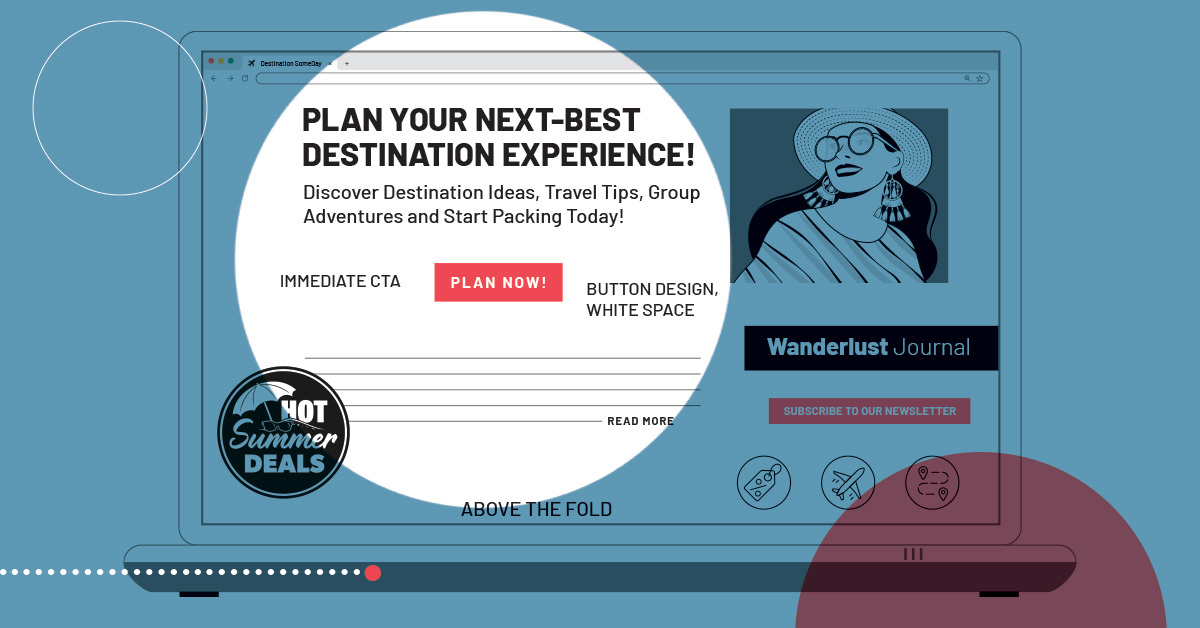
    The placement of your CTA is critical. It needs to be easily seen by the user. When placed where users naturally look or scroll, it’s more likely to catch their attention. Your CTA should align with the user’s journey through the content and be placed at points where users have received enough information to decide. Strategic placement increases engagement, and CTA’s placed above the fold or at the end of compelling content tend to perform better, especially when the CTA tells the user what step you want them to take next. Your CTA should naturally fit within the context of the content. For example, the “Buy Now” button might be best placed after a product description, while the “Learn More” button would be more effective after an intro paragraph. Here are some examples of common CTA placements, tips, and common mistakes to avoid.

    Above The Fold

    Often, users miss your CTA or fail to see it due to poor placement.  Ensuring your primary CTA is visible without scrolling is crucial. The term “above the fold” originates from newspapers but has been adapted for web design. It refers to the part of a webpage that is visible without scrolling. This is prime real estate for your most essential CTAs because it immediately captures the user’s attention. For instance, a “Sign Up Now” button on a landing page should be placed prominently so visitors see it as soon as they arrive.

    Why it Matters

    • CTAs placed above the fold can improve conversion rates by 10-15%.
    • For B2C websites, this could mean conversion rates of around 3-5%, while B2B websites might see around 2-4%.

    Common Mistakes to Avoid:

    • Cluttered Design: Placing too many elements around the CTA can distract users.
    • Lack of Contrast: It may be overlooked if the CTA doesn’t stand out visually.

    Gibson & Dehn

    End of Content

    Placing CTAs at the end of blog posts, articles, and videos can be highly effective. By the time readers or viewers reach the end of your content, they have consumed valuable information and are more likely to take action. For example, at the end of a blog post about email marketing tips, you might include a CTA for a free email marketing guide.

    Why It Matters:

    • End-of-content CTAs can see a 20-30% conversion rate increase when strategically placed.
    • B2C end-of-content CTAs might convert at 1-2%, while B2B could be around 1-1.5%.

    Common Mistakes:

    • Weak Placement: The CTA will not be seen if the content isn’t engaging enough to keep users until the end.
    • Non-compelling Offers: If the offer isn’t enticing enough, users won’t take action despite reading the content.

    call homeinc

    Pop-Ups and Slide-Ins

    While pop-ups and slide-ins can be intrusive if overused, they can capture attention effectively when used sparingly and strategically. A well-timed pop-up offering a discount code just as a user is about to leave the site can convert potential lost leads into customers. Slide-ins, which appear less abruptly, can provide additional CTAs without disrupting the user experience.

    Why It Matters:

    • Exit-intent pop-ups can capture 10-15% of visitors abandoning the site.
    • Pop-ups generally have a conversion rate of 3-5%.

    Common Mistakes:

    • Overuse: Excessive use of pop-ups can annoy users and lead to higher bounce rates.
    • Irrelevant Offers: Pop-ups that don’t align with user intent can be seen as spammy.

    pop-ups and slide-ins

    Sidebars and Banners

    Sidebars and banners are ideal for secondary CTAs or ongoing promotions. A sidebar on a blog could feature a “Subscribe to Our Newsletter” CTA, while a banner at the top of the page could announce a limited-time sale. These placements keep CTAs visible without overshadowing the main content.

    Why it Matters:

    • Sidebars typically have a lower conversion rate, around 0.5-1% for B2C and 0.3-0.6% for B2B.
    • Banners can convert at around 0.5-1.5%.

    Common Mistakes:

    • Ignoring Mobile Users: Sidebars may not be as practical on mobile devices, where they are often hidden.
    • Banner Blindness: Users often ignore banner ads, so making them too subtle can reduce effectiveness.

    sidebars and banners

    Now that we’ve got a better handle on where your CTAs should be placed let’s discuss the equally important topic of timing.


    timing your ctaTiming Your CTA

    Timing your CTAs correctly is crucial for maximizing conversions. Depending on the urgency of your offer, the value you deliver, or whether you’re trying to re-capture someone who is about to leave your site before converting, timing can play a crucial role in the success of your offer. Sometimes, you might want to immediately engage with a time-sensitive offer or wait until you’ve provided enough value before making the ask.

    Immediate Engagement

    Using CTAs early in the user journey can be particularly effective for urgent offers or time-sensitive actions. For instance, during a flash sale, a “Shop Now” button placed prominently at the top of the homepage ensures that users are immediately aware of the offer.

    Why It Matters:

    • Immediate CTAs can see a conversion rate increase of up to 15%.
    • For B2C, this could mean rates of 3-5%, and B2B around 2-4%.

    Common Mistakes:

    • Premature Asking: Asking for too much too soon can turn users away. Ensure the CTA matches the user’s stage in the journey.
    • Lack of Context: CTAs without context or value proposition early on can confuse users.

    After Building Value

    Placing CTAs after providing valuable information increases the likelihood of conversion. When users feel they have gained something from your content, they are more inclined to take the next step. For example, after an informative video tutorial, a CTA to download a related eBook can feel like a natural progression.

    Why It Matters:

    • Value-building CTAs can boost conversions by 20-30%.
    • Conversion rates might be around 2-4% for B2C and 1-3% for B2B.

    Common Mistakes:

    • Delayed CTAs: Waiting too long after delivering value can lead to missed opportunities.
    • Weak Follow-Up: CTAs that don’t build on the provided value may not resonate with users.

    Exit-Intent Pop-Ups

    Exit-intent pop-ups detect when a user is about to leave your site and present a final offer or reminder. This could be a discount code, a special offer, or a reminder to subscribe to your newsletter. These pop-ups are a last-chance effort to retain the visitor and can significantly improve conversion rates.

    Why It Matters:

    • Exit-intent pop-ups can recover 10-15% of abandoning visitors.
    • They generally convert at 2-4%.

    Common Mistakes:

    • Overwhelming Offers: Too many or too aggressive offers can frustrate users.
    • Poor Timing: The user might have left if the pop-up appears too late.

    Now that placement and timing are out of the way, let’s dive into the most challenging part of crafting a compelling CTA: the message you want to communicate and how best to encourage action.


    cta messageCrafting Your CTA’s Message

    The wording of your CTA is crucial for driving action. Often, CTAs lack clear and concise language or use passive language that doesn’t encourage action. To write a compelling CTA, keep these things in mind:

    Make Sure Your CTA is Clear and Concise

    Your CTA should use straightforward language that tells the user precisely what to do. Ambiguity can lead to confusion and lower conversion rates. Phrases like “Download Now,” “Sign Up Today,” or “Get Your Free Trial” leave no room for doubt about the desired action.

    Why It Matters

    • Clear CTAs can increase conversion rates by 20-30%.
    • B2C clear CTAs convert at around 3-6%, B2B at 2-5%.

    Common Mistakes:

    • Ambiguity: Vague language can confuse users about what action to take.
    • Jargon: Using industry-specific language can alienate some users.

    Action-Oriented

    Starting your CTA with strong verbs encourages action. Words like “Download,” “Sign Up,” “Get Started,” and “Join” are powerful motivators. They provide clear directives that prompt immediate responses from your audience.

    Why It Matters:

    • Action-oriented CTAs can see conversion rate increases of up to 20%.
    • B2C might see 3-5%, B2B around 2-4%.

    Common Mistakes:

    • Weak Verbs: Using weak verbs like “Click Here” instead of action-oriented verbs can reduce urgency.
    • Too Many Words: Overly long CTAs can dilute the message and reduce effectiveness.

    Urgency and Scarcity

    Creating a sense of urgency or scarcity can prompt users to act quickly. Phrases like “Limited Time Offer,” “Only a Few Left,” or “Ends Soon” tap into the fear of missing out (FOMO), which can be a powerful motivator for immediate action.

    Why It Matters:

    • Urgency/scarcity CTAs can improve conversions by 30-40%.
    • Conversion rates for B2C can be around 4-6%, B2B around 3-5%.

    Common Mistakes:

    • False Urgency: Misleading users with fake urgency can damage trust.
    • Overuse: Constantly using urgency can lead to user fatigue and reduced effectiveness.

    Use Direct and Action-Oriented Language

    Action Verbs:

    • Start your CTA with a strong action verb that tells users exactly what to do. Examples include “Download,” “Sign Up,” “Register,” “Get Started,” “Join,” “Buy,” “Subscribe,” “Claim,” “Read,” or “Learn More.”

    Specificity:

    • Be specific about what the user will get by taking action. Instead of a vague “Click Here,” use “Download Your Free E-Book,” “Subscribe to Our Newsletter,” or “Start Your Free Trial.”

    Keep It Short and Simple

    Brevity:

    • Limit your CTA to a few words. The ideal length is usually between two to five words. Examples include “Shop Now,” “Get Offer,” “Join Now,” “See Plans,” or “Contact Us.”

    Clarity:

    • Avoid jargon or complex language. Ensure that anyone can understand what the CTA means at a glance.

    Focus on Benefits

    Highlight Value:

    • Make it clear what the user will gain by clicking the CTA. For example, “Get 20% Off,” “Try for Free,” or “Join Our Community” emphasize the benefit to the user.

    Solve a Problem:

    • Address a specific need or problem your audience has. For example, “Find Your Perfect Fit,” “Boost Your Productivity,” or “Secure Your Spot.”

    Make the Next Step Obvious

    Next Steps:

    • Clearly indicate what will happen after the user clicks. For example, “Sign Up for Free,” “Download Now,” or “Get Instant Access” make it clear what the user should expect.

    Consistency:

    • Ensure that the CTA aligns with the user’s expectations set by the preceding content. If your content is about an e-book, the CTA should directly relate to downloading that e-book.

    Avoid These Pitfalls

    Too Many Words:

    • Long, complicated CTAs can overwhelm users. Stick to simple, direct instructions.

    Vague Language:

    • Avoid generic phrases like “Click Here” or “Learn More.” Be specific about what the user will get or do.

    Misleading Information:

    • Ensure your CTA accurately represents what happens next. If users feel misled, it can damage trust and reduce conversions.

    Inconsistent Messaging:

    • The CTA should align with the surrounding content. For example, if the content discusses an e-book, the CTA should be related to downloading the e-book.

    Examples of Clear and Concise CTAs

    • E-commerce: “Add to Cart Now” vs. “Add to Cart”
    • SaaS: “Start Your Free Trial” vs. “Try It Free”
    • Content Download: “Download Free Guide” vs. “Get Your Free Guide”
    • Newsletter Signup: “Join Our Mailing List” vs. “Subscribe for Updates”

    By implementing these strategies, you can create CTAs that are clear, concise, and compelling, driving higher engagement and conversion rates.


    promotional offersPromotional Offers

    Promotional offers can significantly enhance the appeal of your CTAs. Below are some effective strategies.

    Discounts and Coupons

    Offering discounts and coupons is a tried-and-true method to incentivize action. A CTA like “Get 20% Off Your First Order!” provides immediate value and encourages users to make a purchase.

    Stats:

    • Discounts can boost conversion rates by 20-40%.
    • B2C discounts convert at around 4-6%, B2B around 3-5%.

    Common Mistakes:

    • Over-Discounting: Frequent or large discounts can devalue your product.
    • Hidden Terms: Not clearly stating the terms and conditions can lead to customer dissatisfaction.

    Free Trials and Samples

    Allowing users to try your product or service before committing can build trust and reduce hesitation. A CTA such as “Try It Free for 30 Days!” invites users to experience the benefits without financial risk.

    Stats:

    • Free trials can improve conversion rates by 15-25%.
    • Conversion rates for B2C can be around 3-5%, B2B around 2-4%.

    Common Mistakes:

    • Complex Signup: Making the process to access the free trial too complicated can deter users.
    • Lack of Follow-Up: Not following up with trial users to convert them to paid users can result in lost opportunities.

    Exclusive Content

    Providing access to exclusive content can entice users to take action. A CTA like “Access Our Free E-Book Now!” offers value in exchange for their engagement, such as an email signup or social share.

    Stats:

    • Exclusive content CTAs can boost conversions by 20-30%.
    • B2C conversion rates might be around 3-5%, B2B around 2-4%.

    Common Mistakes:

    • Low Value: Offering content that isn’t valuable enough to users can lead to low engagement.
    • Not Mobile-Friendly: If the content isn’t accessible on mobile devices, it can limit conversions.

    Example CTAs

    Here are some example CTAs tailored to different industries:

    E-commerce

    • “Add to Cart Now and Enjoy Free Shipping!”: This CTA highlights a common incentive in e-commerce and encourages immediate action.
    • “Limited Time Offer: Buy Now and Save 20%!”: Urgency combined with a discount can drive quick conversions.

    SaaS

    • “Start Your Free Trial Today – No Credit Card Required!”: Removing the credit card requirement lowers the barrier to entry.
    • “Get Started Now and Unlock Premium Features!”: Encourages users to take advantage of additional benefits.

    Content Download

    • “Download Our Free Guide to Digital Marketing!”: Provides immediate value to the user.
    • “Get Your Free E-Book on Effective Email Campaigns!”: Targets a specific interest with valuable content.

    Newsletter Signup

    • “Join Our Mailing List for Exclusive Updates and Offers!”: Emphasizes exclusivity and benefits.
    • “Subscribe Now and Get Weekly Tips Straight to Your Inbox!”: Highlights the frequency and value of the content.

    Bundled Deals

    Bundling products or services can create a compelling offer. A CTA like “Buy One, Get One Free!” provides added value and can increase the perceived worth of the offer.

    Stats:

    • Bundled deals can improve conversion rates by 25-35%.
    • B2C might see 4-6%, B2B around 3-5%.

    Common Mistakes:

    • Confusing Bundles: Complicated bundle deals can confuse users and reduce conversions.
    • Not Highlighting Savings: Failing to communicate the deal’s value clearly can make it less attractive.

    A common mistake people make when designing their CTAs is the actual design of the buttons and where the CTAs are placed relative to other visual elements on the page. Poor design can lead to users simply not seeing them even when strategically placed. The key is to design for visibility, from contrast to size and placement.


    Design for Visibility

    design for visibilityThe design of your CTA plays a critical role in attracting clicks and conversions. Use contrasting colors to make your CTA stand out from the rest of the page. The button should be eye-catching and easily distinguishable from other elements. It should also be large enough to click easily, especially on mobile devices, and placed in a prominent location where users can easily find it.

    Button Design

    The design of your CTA button plays a critical role in its effectiveness. Use contrasting colors to make the button stand out from the rest of the page. The button should be large enough to be easily clickable but not so large that it feels out of place.

    Why It Matters

    • Well-designed buttons can increase conversion rates by 10-20%.
    • B2C conversion rates can be around 3-5%, B2B around 2-4%.

    Common Mistakes:

    • Poor Contrast: Buttons that don’t stand out visually can be missed.
    • Unclear Text: Button text that’s hard to read reduces effectiveness.

    Whitespace

    Surrounding your CTA with sufficient whitespace ensures it doesn’t get lost in the clutter. Whitespace draws attention to the CTA and makes it easier for users to focus on the desired action.

    Why It Matters:

    • Proper use of whitespace can improve conversions by 15-20%.
    • B2C conversion rates can be around 3-5%, B2B around 2-4%.

    Common Mistakes:

    • Overcrowded Layout: Cluttered designs make it hard for users to focus on the CTA.
    • Lack of Visual Hierarchy: Not establishing a clear visual path to the CTA can reduce its impact.

    Icons and Graphics

    Enhancing CTAs with relevant visuals can increase engagement. Icons and graphics can draw the eye and help users quickly understand the action you want them to take. For example, a download button might include a small arrow icon to reinforce the action.

    Stats:

    • CTAs with visuals can boost conversions by 20-25%.
    • B2C might see 3-5%, B2B around 2-4%.

    Common Mistakes:

    • Irrelevant Graphics: Using visuals that don’t align with the CTA can confuse users.
    • Overuse: Too many visuals can make the CTA look cluttered and reduce effectiveness.

    Test, Test, Test, and Optimize

    test and optimizeOnce you’ve crafted what you think is a killer CTA, your marketing job is still not done. Structuring A/B tests for CTAs effectively requires a systematic approach to ensure reliable and actionable results. The first step is to define the objective of your A/B test clearly. Identify the metric you aim to improve: click-through, conversion, or engagement levels. This clarity of purpose will guide your test design and help you measure success accurately. Next, decide on the variables you want to test. Standard variables include CTA wording, color, size, placement, and design elements such as icons or images. By isolating one variable at a time, you can accurately determine its impact on user behavior.

    Once you have defined your objectives and variables, create two versions of your CTA: the control (current version) and the variation (new version). Ensure that both versions are identical in every aspect except for the variable being tested. This eliminates confounding factors, allowing you to attribute any differences in performance directly to the change you made. For example, if you are testing the color of the CTA button, both versions should have the exact wording, size, placement, and design, differing only in color.

    Implement the A/B test using a reliable testing tool that can randomly split your audience into two groups, ensuring that each group has a similar distribution of characteristics. This randomization is crucial for obtaining unbiased results. As the test runs, collect data on key performance indicators (KPIs) such as click-through rates, conversion rates, and user engagement. Monitor the test to ensure it runs smoothly and to check for any technical issues that could skew the results.

    Finally, the data will be analyzed to determine which version performed better. Use statistical methods to assess the significance of your results, ensuring that any observed differences are not due to chance. Look for patterns and insights that can inform future tests and optimization strategies. It’s essential to run the test sufficiently to account for variations in user behavior over time, typically at least one to two weeks. After analyzing the results, implement the winning version and consider running further tests to optimize your CTAs. A/B testing is an iterative process, and continuous testing and refinement can substantially improve your marketing performance.

    Why It Matters:

    • A/B testing can improve conversion rates by 10-30%.
    • B2C conversion rates can be around 3-5%, B2B around 2-4%.

    Common Mistakes:

    • Insufficient Testing: Not testing enough variations can lead to missed opportunities.
    • Ignoring Small Changes: Sometimes, small changes can have a significant impact, so don’t overlook them.

    Analyze Results

    Once you’ve tested different CTA variations, use data to determine which performs best. Analyzing metrics like click-through, conversion, and bounce rates can provide insights into what works and what doesn’t. Use this data to refine your strategy and continuously improve your CTAs.


    Famous Promotional Fails

    Sometimes, even the best-laid plans can go awry. Suppose you’re feeling a little overwhelmed as a marketer. Knowing that even some of the most well-recognized companies can make mistakes when crafting CTAs is comforting. It can be helpful to look at examples of some promotional offers and understand what went wrong and how to avoid these mistakes when developing your CTA and structuring your promotional offers.  Here are a few famous promotional offers that didn’t go according to plan due to lack of clarity, poor timing, or wrong placement:

    1. Netflix “Start Your Free Trial”:
      • Issue: Netflix used a “Start Your Free Trial” button prominently. However, the details about the automatic subscription after the trial period were not clear enough. This led to confusion and frustration among users who were unaware they would be charged if they didn’t cancel in time.
      • Impact: Negative user feedback and complaints about deceptive practices.
    2. Airbnb “Contact Host”:
      • Issue: Airbnb had a “Contact Host” button that led users to a messaging page, but users expected to see availability or pricing details directly. This disconnect caused frustration as it added an extra step to the booking process.
      • Impact: Lower conversion rates as users abandoned the process due to confusion.
    3. Twitter “Promoted” Button:
      • Issue: Twitter introduced a “Promote” button for tweets without adequately explaining the costs or the process involved. Users clicked on it expecting a simple promotion but were met with complex steps and unclear pricing.
      • Impact: Users were discouraged from using the feature, and it led to a drop in ad revenue from promoted tweets.
    4. eBay “Buy It Now” vs. “Add to Cart”:
      • Issue: eBay’s “Buy It Now” and “Add to Cart” buttons were confusing for some users. They weren’t clear on the difference between buying immediately and adding items to their cart for later purchase.
      • Impact: This led to abandoned carts and frustrated customers, which hurt overall sales.
    5. LinkedIn “Join Now”:
      • Issue: LinkedIn’s “Join Now” button on premium subscription pages was confusing for existing users who thought it was meant for creating a new account rather than upgrading to a premium membership.
      • Impact: Potential loss of premium subscriptions due to unclear messaging.

    Lessons Learned

    1. Clarity is Crucial: Ensure CTAs are clear and descriptive about what will happen when clicked.
    2. Context Matters: Place CTAs where users expect them and make sure they logically follow the content.
    3. Transparency: Be upfront about any costs or commitments associated with the CTA.
    4. User Testing: Conduct user testing to identify any confusion and adjust CTAs accordingly.

    These examples highlight the importance of clear communication, appropriate timing, and strategic placement in the success of promotional offers. Ensuring that your audience understands the offer, launching it at the right time, and making it easily accessible can significantly improve the effectiveness of your CTAs and overall marketing campaigns.

    A powerful CTA can significantly enhance the effectiveness of your marketing efforts. By understanding and implementing strategic placement, perfect timing, clear messaging, attractive promotional offers, visual appeal, and continuous testing, you can craft CTAs that drive conversions and achieve your marketing goals. Remember, the key to a successful CTA is to make it clear, compelling, and valuable to your audience. Start experimenting with different strategies today and watch your engagement and conversion rates soar.

    By focusing on these elements and avoiding common mistakes, you can create CTAs that attract attention and drive meaningful actions. Whether you’re targeting consumers or businesses, a well-crafted CTA can make all the difference in your marketing success.

    Good luck crafting your next killer CTA from the Marketing.com team!