Category: Print

  • Personalized Promotions: Using Print-On-Demand and Variable Messaging to Increase Conversions

    Personalized Promotions: Using Print-On-Demand and Variable Messaging to Increase Conversions

    Don’t treat your favored customers and prospects like strangers. To increase your conversion rates, build loyalty, and realize greater ROI in your marketing campaigns, make every interaction personal by leveraging consumer data with personalized messages that are printed on demand.

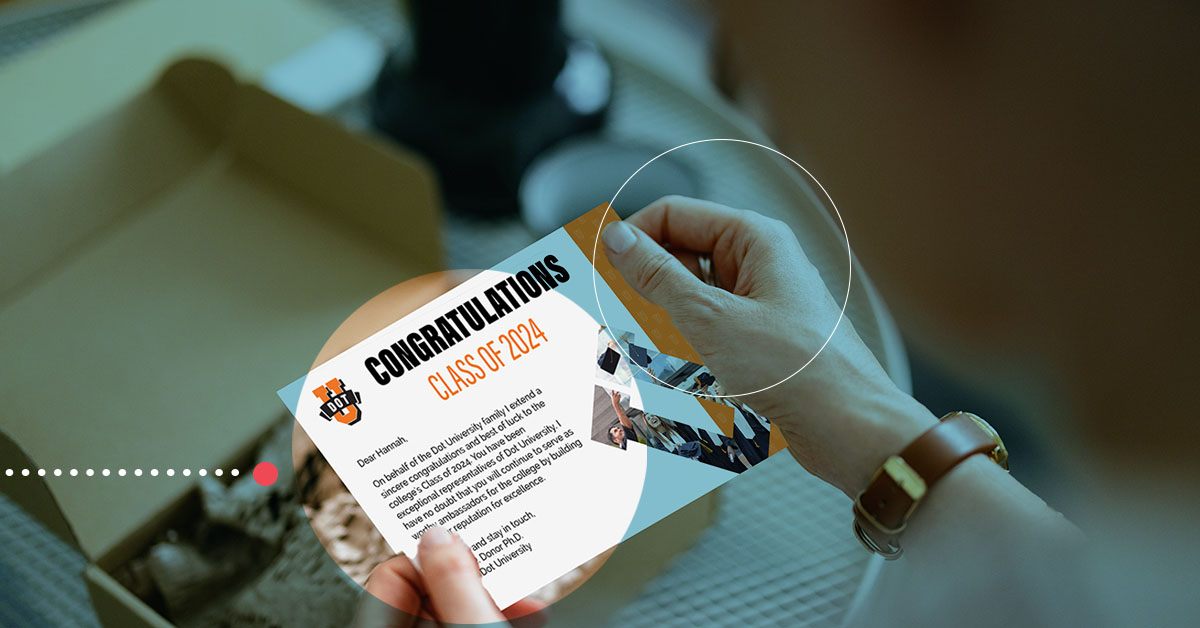
    Variable data printing revolutionizes traditional printing methods by allowing for the customization of each printed piece within a single print run; every direct mail piece can contain unique content tailored to the recipient, including personalized messages, QR codes, images, and even offers. According to a study by InfoTrends, personalized direct mail can yield response rates that are 36% higher than non-personalized mailings, highlighting the effectiveness of this approach. Print on demand (POD) further enhances the capabilities of variable data printing by enabling businesses to produce customized marketing materials on an as-needed basis. Instead of relying on large print runs and storing excess inventory, businesses can leverage print-on-demand to print materials in response to specific customer actions or events.

    Adding personalization to their experience leads to great results. With the application of variable data print, you can effortlessly customize every contact by optimizing your customer data to include personal touches that help drive more meaningful engagement with your audience. In addition, you’re shaping your customer’s experience around what they want, and letting them know that you’re paying attention to their needs. By analyzing customer demographics, purchase history, and behavior patterns, companies can craft personalized messages that resonate with individual recipients on a deeper level. According to Statista, 63% of marketers have observed that personalization increases customer interaction and ultimately produces better conversion rates.

    Print on demand capabilities let you respond quickly to customer behavior and more accurately target every promotion with messages that are relevant to client needs.

    Behavior-Based Print-on-Demand

    Behavior-based messaging lies at the heart of effective variable print campaigns. By leveraging customer data and analytics, companies can tailor messaging to align with individual behavior patterns and preferences. Print on demand lets you react and take an active role in the timing of your contacts with customers by providing the ability to engage with customers at various stages of their buying journey or life events. Taking the data a step further, you can build lookalike audiences that match segments of your current customers to pattern campaigns around lifestyles of your prospects or create prospect lists based on major life events.  According to research by Forbes, personalized marketing campaigns based on behavioral data can result in a 20% increase in sales. The real-time customization available through the combination of variable and print on demand options ensures that the information remains accurate and up to date, enhancing the overall effectiveness of the campaign.

    Loyalty-Based Print-on-Demand

    Based on an understanding of the motivations of your loyalty program members, print-on-demand and personalization through variable data printing combine to create opportunities to keep every communication relevant and valuable to members. You can establish trust and strengthen the relationship when your personalized messaging matches their expectations and mirrors the way audiences make purchasing decisions. Personalized direct mail serves as the engine for loyalty program membership or plan enrollment, from personalized welcome letters and membership packets to customized thank you notes, milestone cards, reward redemption opportunities, exclusive invites and samples of new products – all which can be produced on demand through POD. According to Shopify, as many as 84% of consumers say they’re more apt to stick with a brand that offers a loyalty program, and 66% of customers say the ability to earn rewards changes their spending behavior.

    Membership programs are especially effective when communications are coordinated with other marketing channels and linked to digital marketing efforts. Variable data printing gives you the ability to print QR codes that connect through smartphones to immersive WebAR and digital content exclusive experiences. Personalized multi-channel options provide emotional attachments, maps, promo codes, and personalized URLs that direct customers to content curated especially for them that generate better leads and higher conversion rates. According to Zipdo, 72% of consumers say they would prefer to connect with businesses and brands through a multichannel approach.

    Promotion-Based Print-on-Demand

    Promotional-based messaging remains a staple of direct mail marketing. Potential customers are far more likely to pay attention to a personalized message in your promotional mailings when it closely aligns with their interests and needs. Print-on-demand allows you to scale up marketing efforts and customize promotions in small batches to help you control inventory and more closely tailor your promotions to speak directly to your prospect. The results are higher engagement rates. increased brand awareness, and ultimately, more sales. According to McKinsey, companies that grow faster derive 40% of their revenue from personalization in comparison to their competitors.

    Variable data printing combined with the ease of print-on-demand provides customized products using automation via API’s or other marketing automation platforms like Marketing.com’s Dot™, SaaS through channel marketing platform, that streamlines the ordering, printing, and distribution of your direct mail campaigns. It negates the need to keep and manage marketing collateral inventory and helps you reduce both costs and waste through variable data options that are as easy to order as a single click.  According to a survey by Adobe, approximately 4 out of every 5 marketers see a positive ROI when they use personalization in their campaigns.

    Print-on-demand is not only for small batches, but useful anytime you want to get your promotion out the door quickly with personalized messaging that directly targets customers, loyalty program members, and prospects. Marketing.com can help you connect the dots to find ways to leverage your data and integrate print-on-demand and variable marketing solutions that increase conversion rates and generate revenue.

  • Your Guide to Commercial Print Finishes for Your Next Project

    Your Guide to Commercial Print Finishes for Your Next Project

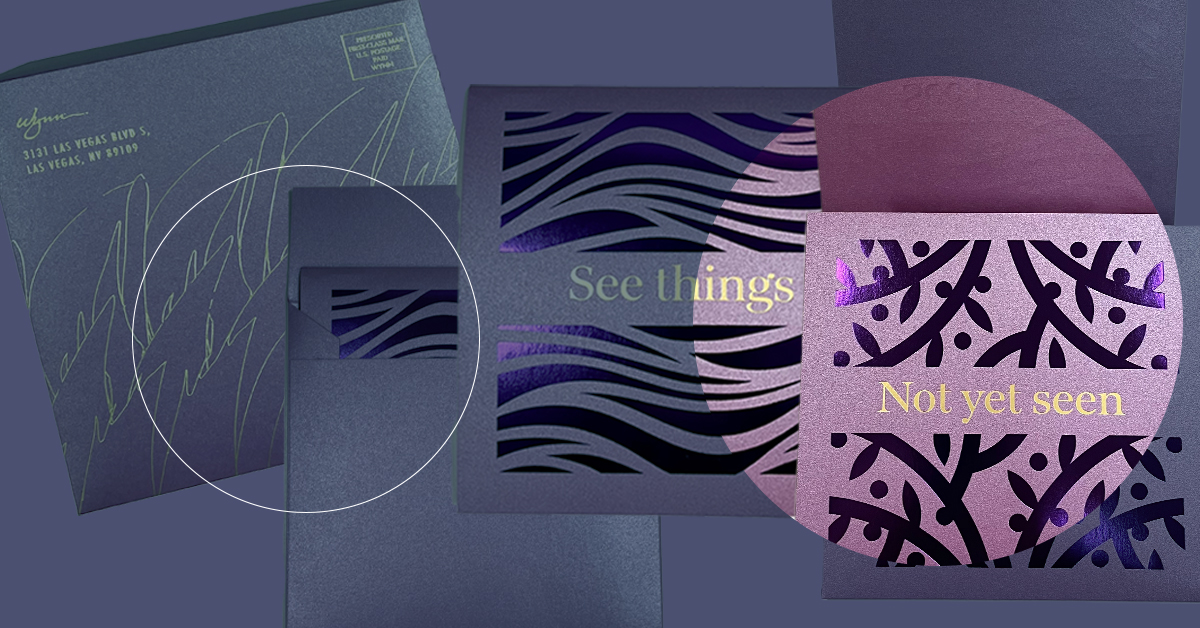
    Selecting the perfect print finishes for your marketing projects is the final and very vital step to creating a memorable and engaging experience for your customers, clients, and prospects. Specialty finishes elevate your print materials to an entirely new level with processes, techniques, and materials that highlight your design, keep it looking great, and catch and hold people’s attention visually, through touch, and even with pleasing scents.

    This brief guide to widely used commercial print finishes and coatings can help you choose the right solution for the greatest impact of your print collateral.

    Varnishing

    As one of the most common and popular finishing techniques for printed material, varnishes are used to protect and preserve and give pages a smooth, uniform feel, just as wood varnishes shield wood surfaces from wear and damage. Varnishes can be glossy, satin, or matte and give printed pieces a modern, sleek appearance. Not only do varnishes add a slight weight to the paper, they are also valued for their ability to prevent smudging, smearing, and fingerprints. A varnish coating can be applied to an entire document or in selective spots.  There are several types of varnishes:

    • Gloss Varnish gives printed surfaces a vibrant look because it reflects light to make colors bright and vivid. Gloss varnish improves the appearance of photos and designs and provides higher contrast between colors.
    • Matte Varnish provides the same smooth, consistent coating as gloss varnish without the shiny and reflective surface. This varnish type softens appearances, which makes it an ideal choice for material that contains small text because matte varnish reduces glare off the page.
    • Silk or Satin Varnish lands somewhere in the middle between gloss and matte varnish in terms of the sheen and provides a nice balance for colors and text.
    • UV Varnish uses an ultraviolet technique to first apply a very glossy liquid coating to the surface of a printed page and then dries the page using ultraviolet light. The product: image-rich printed materials that look stunning and eye-catching. An added benefit is that paper with UV coatings can be recycled. UV varnishes can be applied to the entire printed surface for full coverage, to selected areas or spots to highlight and draw attention to important details (Spot UV varnishing), or provide raised UV coatings that add tactile and dramatic effect to the surface of the page.

    Print varnishes are a popular choice for business cards, Point of Purchase displays, posters, brochures, and flyers.

    Letterpress, also called Debossing

    Letterpress was the earliest method for producing repeated impressions on a sheet or continuous roll of paper. The process delivers high quality by depressing portions of the page to give text or images a vintage look and feel. Letterpress adds a tactile dimension because images and text are not only read, but also felt. Letterpress or debossing is favored for its consistency and ability to print on a wide range of paper regardless of thickness or texture. Letterpress adds a timeless customized elegance look and feel.

    Letterpress is used for book publishing, company logos on corporate stationery and business cards, and to add elegance to invitations.

    Embossing

    Embossing is the opposite of letterpress or debossing and is a print finishing process that raises parts of a printed page for both visual and tactile emphasis. It can give the material a physical depth and produce shadows and highlights on the page to add 3D effects to text and images. It’s ideal for thicker paper and card stock and the dies used to create the embossed effect can be sculpted as single-level, multilevel, or with beveled edges to create memorable impressions. Embossing is commonly used with other finishing techniques like foil stamping or UV lamination to enhance designs with an elegant look and feel that literally makes your message stand out.

    Embossing can be found on cards and envelopes, greeting cards, wedding stationery, books, invitations.

    Die-Cutting and Creasing

    To create printed materials that stand out with customized shapes and forms, die-cutting is a favored finishing option. The procedure is akin to how a pastry-cutter produces cookie and dessert shapes. During this finishing process, a custom piece—called a die—physically cuts shapes into a paper’s design. Die-cutting delivers a tactile element to printed materials and provides the ability to introduce intricate patterns into 2D designs. The same technique used in die-cutting can create page creasing folds or make micro-perforations for easy tearing.

    This technique is commonly used for pocket folders, specialty cuts, , business cards, and brochures.

    Lamination

    When protecting printed material from moisture, repeated handling, and fading, the preferred finishing technique is lamination. Similar in many ways to varnish finishes, lamination gives materials a professional, high-quality look. However, unlike a varnish finish, lamination adds a degree of sturdiness due to its thickness and weight. Lamination can add a glossy, satin, or matte sheen to material and improves the appearance of photos, images, and colorful designs. Laminate coating is typically a thin polypropylene film. AQ (Aqueous Coating) is another option that provides the same result with the added benefit of being water-based and environmentally friendly. 

    Lamination is a popular print finish used for restaurant and bar menus, price lists, maps, educational and training materials, , membership cards and IDs.

    Foil Stamping

    To give printed materials an especially elegant, luxurious look and feel, one of the easiest methods is foil stamping.  It highlights important text and logos with metallics or colored foils. This finishing technique most often requires melding paper and foil with heat and pressure. Next either a die cut or a digital foil fusing process completes the process to create stunning results that have more shine and gloss than metallic inks. Foil stamping is extremely effective for highlighting and adding visual importance and formality to printed material. While silver and gold are used most often, foils are available in assorted shades of color and reflection.

    Some great ways to incorporate foiling into your printing finishes would be creating intricate backgrounds on invitation cards, business stationery, high-end booklets and photo albums, and product labels.

    Thermographic Printing

    Also called Raised-Ink printing, this finishing process is a more affordable version of embossing that builds texture with special ink and powders to result in shiny text or images. Rather than require dies that are pressed into the paper to create an impression, thermographic printing comprises three steps that occur sequentially to achieve the desired look and feel. First, before ink has dried on the paper, a powdered resin coats the sheet, adhering only to the wet ink. Next, the sheet is passed under a vacuum which sucks unused resin off the paper once it has dried. Last, the sheet is passed under a heating unit that melts and causes the ink to rise and complete the process.

    Thermographic printing is commonly used on greeting cards, invitations and business cards.

    Trends in Printing Processes We’re Watching

    Marketing.com is in a constant state of innovation shaped by emerging technologies and evolving practices. Here are three trends we’re monitoring and recommending:

    1. Environmentally friendly print processes and materials will grow in importance as more customers and consumers demand that companies reduce waste, eliminate toxic chemicals, and use materials created from sustainable sources or that can be recycled.
    2. Scented inks that activate the sense of smell are one of the most powerful ways to trigger emotions, evoke memories, and create a more immersive experience for customers and consumers. While it is a familiar tool for marketing health and beauty products, it will find increased use in the hospitality, food and beverage, and other industries because it has been shown to increase consumer engagement and response, generate high recall, and enhance brand image.
    3. Special effects like shimmering and processes using laser cutting are gaining traction as ways to create dramatic effects and unique textured experiences on printed material.  Shimmering uses pearlescent coatings to provide a luxurious appearance. Laser cutting produces high-quality shapes and patterns on a wide variety of paper stock and is a more affordable option to die cutting. These and other innovative practices will continue to evolve and give businesses more options to attract and engage customers.

    When it comes down to separating your business from your competitors, it’s the details that matter. The right print finishing process or technique is the final flourish that makes your marketing and print content impossible to overlook. Innovations and cost-saving efficiencies are providing affordable print finishing solutions that stir the senses and add a layer of beauty and elegance to every printed piece for a memorable experience.

    Contact a Marketing.com print marketing expert today to learn more about how we can help you connect the dots to build stronger relationships with clients and employees through these trends.

  • 7 Benefits of Integrating Traditional Print with Your Digital Marketing Campaigns

    7 Benefits of Integrating Traditional Print with Your Digital Marketing Campaigns

    Tremendous gains are possible for marketing professionals to increase the effectiveness of their digital marketing campaigns by integrating traditional print assets that reinforce brand messaging. When print is mixed into multichannel marketing campaigns, your business adds a component to your customer communications that is consistently reported to be the most trusted and engaging ways to set your business apart from the competition.

    Here are seven advantages your business can realize when print marketing is included in digital campaign strategy.

    1. Enhanced Brand Recognition – Placing your brand on print marketing reinforces your brand identity in multiple places where your customers are likely to encounter and remember it. When your brand’s visual identity and message are consistent across both digital and print marketing materials and adapted to the preferences for how they receive marketing messages, your business will become more memorable with every encounter. Direct mail on its own delivers great results, but when it’s added to a multichannel marketing mix, conversions increase sharply. According to the USPS, marketers saw their ROI increase by 60% when combining direct mail with digital channels.
    2. A Fuller Multichannel Experience – Using print in coordination with digital marketing allows your customers to seamlessly transition between offline and online experiences. You give them a more holistic and convenient way to connect with your business that harmonizes with their lifestyle. One way to connect print and digital is with QR codes or Personal  URLs (PURLs) in print materials that lead to websites and landing pages and can be personalized to allow for better tracking of performance. When you meet your audience where they are, you increase the chances of engagement and conversions.  According to Retail Dive, the average engagement rate of campaigns using three or more channels is 18.96% across all channels while single-channel campaigns earned only 5.4%.
    3. Improved Personalization – You can use the data you’ve gathered through your digital channels to enjoy the benefits that only direct mail personalization delivers. Innovative print technologies, like variable data printing and software that handprints addresses, greetings, and signatures, allow for highly personalized messaging that creates emotional connections for even greater conversions. You can tailor print messaging to promote online events, use customer buying habits to offer special print deals, and even encourage them to return to complete an abandoned on-line shopping cart with value-added reminders sent by mail. Personalized direct mail has even proven effective for reviving relationships with dormant customers. According to a recent ANA study, 70% of customers surveyed have re-started a relationship because of direct mail.
    4. Increased Brand Reach and Engagement – Not everyone engages with every marketing channel equally. Your customers have preferences for the way they enjoy hearing from your business, and for many of them physical marketing materials like direct mail, brochures, and catalogs rank high. And it is not just older demographics that care about direct mail. It’s also a desired form of communication for age groups that you might think would rely only on digital throughout their purchasing journey. A USPS study shows that 57% of boomers, 45% of GenX, 41% of millennials, and 37% of GenZ would be disappointed if they stopped getting physical mail. 
    5. Higher Response Rates Across Channels – One of the remarkable aspects of adding print marketing into marketing strategies is that in addition to consistently recording high returns on investment (ROI) on its own, print marketing dramatically boosts the performance of other marketing channels. Your customers are more likely to take action when they encounter consistent messaging across different media. It’s reported that multichannel ad campaigns which include direct mail have 20% higher ROI than campaigns that don’t and according to Writers Block Live, businesses that opt to use direct mail and digital ads together lead to a 28% increase in conversion rates and a 450% increase in response rates.
    6. Increased Credibility – When print marketing is used in tandem with other marketing channels, it can add legitimacy and improve your brand’s perceived reliability and trustworthiness. There is something to the physical form of print marketing collateral, that by enabling recipients to touch, hold, and open it, makes the experience memorable and sincere. When a customer interacts with a promotional item or a product, it has been shown to influence mood, behavior and buying habits. According to DMR, 39% of customers say that they try a business for the first time because of direct mail advertising. 
    7. Optimize Channels for Measurable Results – Innovative interactive print content technologies make it possible to track, collect, and analyze the effectiveness of print campaigns integrated with digital marketing campaigns. Using unique phone numbers, URLs, or QR codes gives your print materials more responsive and robust measuring capabilities, and provides your business with valuable insights into customer behavior. Easy-to-use multichannel marketing platforms then lets you apply this knowledge to improve connections and stand out with customers across all of your marketing channels.  Harvard Business Review observed the shopping behaviors of 46,000 consumers and found out that around 73% of consumers prefer shopping through multiple channels.

    It is now easier for businesses to coordinate their digital marketing with direct mail to create cohesive brand messaging everywhere a customer goes for information. Whether online or offline, with multichannel marketing your businesses reach customers with personalized and relevant at every point along their buying journey.

    Contact a Marketing.com multichannel marketing expert today to learn more about how we can help you connect the dots of your digital and print campaigns.