Blog

  • Marketing Gets Personal: 5 Key Personalization Trends To Watch

    Marketing Gets Personal: 5 Key Personalization Trends To Watch

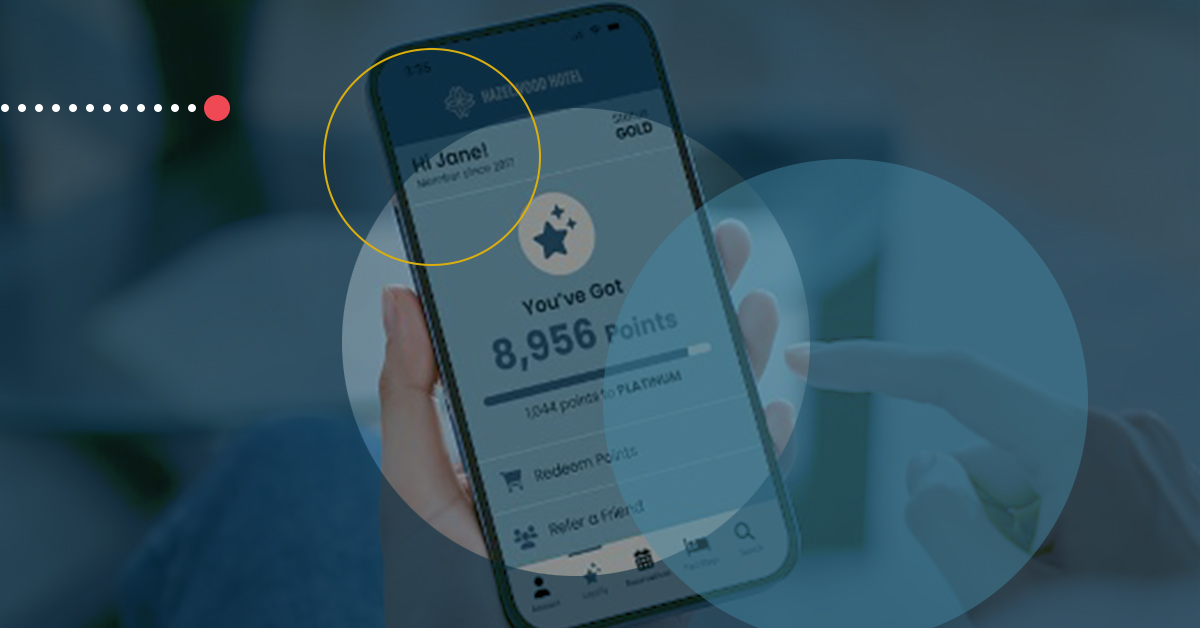
    In 2023, hospitality brands that master personalization with their customers at every stage of their relationship and on every marketing channel will be the ones that grow their audience of loyal guests and customers, increase revenue, and stand apart from the competition. A 2021 McKinsey & Company report found that 78% of consumers are more likely to make repeat purchases from brands that personalize and that nearly 80% are also more likely to refer their family and friends to these companies.

    Here are five personalization trends that resorts, hotels, casinos, and other hospitality properties should consider including in their marketing strategies this year.

    1. Personalization, and in particular AI personalization, will drive brand loyalty

    The ability to create unique experiences for their customers that deliver trustworthy, relevant, and useful information across channels cohesively will only continue to grow in importance to consumers in 2023.

    According to a recent Statista survey, 36% of the consumers reported that they would prefer the brand and keep shopping for their products if the retailer provided a personalized shopping experience. Additionally, 72% of consumers reported that personalization is the top priority when dealing with brands and their products.

    However, personalization in 2023 will require real-time analysis of customer behavior based on the data they share throughout their relationship with the brand.  That can only be done with the support of AI-driven algorithms for product and information recommendations that can not only respond to, but also anticipate, a customer’s booking and traveling preferences.

    2. Personalization Must Blend First and Zero-Party Data and Privacy Concerns

    In a cookieless future, hospitality properties must develop new ways to let their guests and customers share important data that includes travel and purchase preferences and intentions, reviews, and other personal details that can strengthen the relationship.

    However, they must also balance the new ways of collecting and deploying customer data with the increasing privacy concerns of their customers and the impact of privacy regulations. A 2021 survey showed that 28% of consumers felt they had less control over their data than the year before.

    Hospitality properties should see increased privacy restrictions as an opportunity to create deeper relationships through transparency and responsible handling of data. One effective method is using first and zero-party data collection methods to encourage customers to opt-in and provide consent to their personal data being used by the hotel, casino, or hospitality property.  A 2021 study from BCG and Google showed businesses that used zero-party data for marketing achieved up nearly a 3% revenue increase and a realized a 1.5% increase in cost savings.

    3. Personalization Adds Advantages for Loyalty Programs

    According to an Insider Intelligence study, 55% of global consumers report that the primary reason they join a loyalty program is for personalized rewards. Hospitality properties that can continue to provide personalized deals and rewards for their guests and customers optimize the value that recurring business delivers. According to Adobe, returning customers are nine times more likely to buy from a brand than new customers, and these existing customers spend 31% more on average than new customers.

    Personalization makes the practice of one-size-fits-all loyalty programs a thing of the past. Today properties can tailor the experience based on recent reservations and purchases, including accommodations, amenities used, and dining or entertainment offerings enjoyed. However, they should also expect their customers to become more sophisticated in determining what matters most to them. In the competitive hospitality market, properties must remain focused on the customer. McKinsey reports that while that 71% of consumers expect personalization, 76% are frustrated when they don’t get it and won’t hesitate to go somewhere else to find it.

    4. Personalization Powers Omnichannel Marketing

    Omnichannel marketing reaches hospitality customers at every touchpoint of their investigative and decision-making journey and adding personalization gives properties the ability to achieve dramatic results. Every channel is made more impactful when personalization is included in the messaging:

    • According to MarTech, personalized emails deliver six times the transaction rates than non-personalized ones.
    • ReadyCloud reports that retargeted personalized digital ads generate ten times better click-thru-rates.
    • BusinessWire determined that personalized promotions on website homepages influences 85% of customers to make a purchase.

    With hospitality audiences engaging with content across multiple channels, properties must take steps to meet the consumer on the channels their customers trust in order to deliver the experience they demand. According to a Harvard Business Review survey, 73% of respondents consider themselves to be “omnichannel shoppers”. 

    5. Personalization Becomes the Face of Facial Recognition

    Perhaps the most innovative applications of personalization are already taking place in hospitality properties around the world – facial recognition. Vietnam-based luxury hotel implemented facial recognition programs in 2019, and NEOMA reports throughout the world are also utilizing facial recognition to personalize the stays of their customers.

    Facial recognition offers properties the ability to efficiently, safely, and securely grant guests privileges throughout the property with automated verification processes that reduce the strain on busy staff and increase guest satisfaction. Of course, with any technology as new as facial recognition, properties must monitor its application with caution. Respondents to a CHOICE survey said that retail stores should be required to inform customers about the use of facial recognition before they enter the store, and 65% are concerned about stores using the technology to create profiles of customers that could be used to harm them. 

    Conclusion

    Personalization offers resorts, casinos, hotels, and all hospitality properties exciting ways to form closer connections with guests and customers. Using the data their customers willingly share, properties can create memorable experiences, send relevant messaging, and offer better service for their guests. The result is increased revenue, engaged and loyal customers, and recurring business.

  • Digital Fatigue? How to Break Through the Noise with Direct Mail

    Digital Fatigue? How to Break Through the Noise with Direct Mail

    Digital fatigue has become a real issue for consumers and marketers.  The onset of the pandemic caused businesses to focus mostly on their digital platforms.  This hyper focus and reliance on digital media has led to increasing levels of digital fatigue, thereby creating a new challenge: how to establish authentic engagement with their consumers to override digital fatigue and create new connections that drive business. 

    A simple solution for this is to incorporate direct mail as part of your marketing campaign.   The “2022 Hybrid Audience Engagement Survey” conducted by PFL revealed personalized physical mail has significantly higher engagement and response rates at 54% than other forms of communication, even personalized email at 32%.

    Adding a non-digital channel to your approach can break through to your prospects in a way that digital alone struggles to do. Direct mail gives you an opportunity to leave a lasting impression and build a more personal connection with your prospects. According to Writers Block Live, businesses that opt to use direct mail and digital ads together lead to a 28% increase in conversion rates and a 450% increase in response rates.

    How can direct mail enhance a digital campaign?

    Incorporating direct mail into a digital display campaign provides additional opportunities to use your customer data through a marketing channel with a proven success rate. Applying variable, individualized messaging in every direct mail piece creates a strong brand impression and provides a personal touch that homeowners trust. Coordinating digital technologies like geofencing with direct mail campaigns provides layers of contact within targeted communities by combining mobile ads and mailed promotions.

    With direct mail in your marketing mix, you’ll be able to reach prospective audiences and initiate new relationships more efficiently and effectively than you can with digital campaigns alone. It’s especially successful when included in local promotions and campaigns. If you know who your target audience is — as defined by demographic and behavioral data — you could rent or purchase a list of names and addresses of people who meet your target criteria.

    Consumers see direct mail as offering value when they include coupons or coincide with BOGO or other discounts. Because people tend to hang onto a mailer until they can use the offer, they may look at the piece over days or weeks after it’s been received. In addition, studies have shown that feeling and touching a mail piece triggers emotions that makes the engagement all that more real, credible and memorable. Use mail to grab your audience’s attention and connect with them on a personal level.

    Take advantage of direct mail’s superior precision 

    Direct mail gives you the opportunity to personalize your message and include a personal greeting or add a map based on the recipient’s address. This can be effective when combined with digital advertising or emails that can coincide with mailing dates.

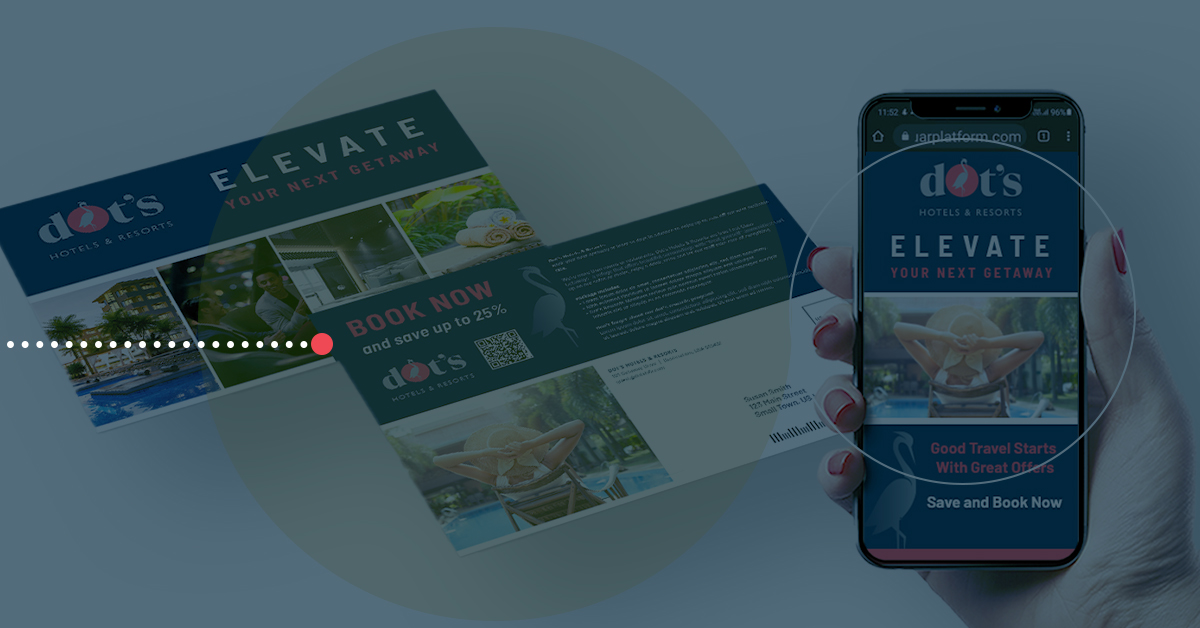
    The idea here is to prime your audience with a direct mail piece that lands in a person’s home mailbox, followed by an online ad that shows up on their smartphone, coordinated with information sent to their inbox via email and then finally reinforced with additional digital touches using techniques like geofencing and retargeting practices. This is becoming increasingly true as the cost of adding an AR experience through direct mail becomes more affordable for businesses of all sizes.

    As we emerge from the pandemic, the need to digitize every aspect of your business can be reassessed mindfully and with your business goals in mind.  Digital fatigue has given us an opportunity to get back to basics and engage consumers in a more tactile way. According to a 2022 Forrester study, 70% of respondents expressed a desire to use digital to enhance their direct mail campaigns. We can help you figure out how to lift your brand above and beyond the clutter in the advertising world.  Contact us today to get started on your break through strategy.

  • Five Trends to Watch in Social

    Five Trends to Watch in Social

    At Marketing.com, we don’t see making predictions for 2023 as putting on a swami’s hat and gazing into a crystal ball. Sure, there may be some game-changing app or innovation that bursts onto the market and completely disrupts something. That’s rare, however. Tik-Tok is everywhere these days, but it was launched in 2017 and it took a few years for its popularity to go stratospheric.

    Instead, we’ve studied the social media landscape to identify five things that have been around, gaining in use, and now ready to dominate social media strategies in 2023. We’re confident that putting one or more of them into practice can help your business generate brand awareness and grow your business.

    1. Keep (or Get) Real – Authenticity Matters

    Social media audiences will continue to want authenticity when they choose who to follow in 2023. Cliches and jargon just won’t cut it anymore. In fact, authenticity is not just an expectation, it’s a demand.

    The old axiom is that people don’t want to be sold to. With social media, that’s not necessarily true. According to Twitter Marketing, 80% of respondents agree they don’t mind being sold to on social media as long as “it’s fun, useful, entertaining, informative or moves me in some way.” This means you can develop stronger bonds with social media followers when you share honest and relevant content on social channels.  

    One way to keep on top of the issues that matter to them is through social listening. What you learn can drive conversations with them and create communities around issues that can create fuller and more meaningful relationships.

    2. Customer Service Goes Social

    In 2023, it will be more important than ever to quickly address potential problems through a direct line of communication to your customers. People have grown to expect fast responses to social media questions and complaints. If someone is experiencing problems, you don’t want to exacerbate things by taking hours to get back to them. In fact, even one hour may be too long.

    According to Sprout Social,  88% of business executives say social media will become the primary channel for customer service and support. One way that will happen is through expansion of chatbots that can be available 24/7 to enhance customer service activities.

    One of the biggest benefits of adding social media to customer service is the ability to turn a potential problem into something positive and immediately strengthen your relationship with your customer.

    3. Selling on Social Takes Off

    Your followers spend time engaging with your business through your social media app to learn more about your business and the products you offer. It only makes sense to give them the option to make a purchase when they’re there. Online stores give customers the ability to browse products and make purchases without leaving your social media app. Statista.com projects that by 2025, social commerce in the United States is set to grow to nearly $80 billion. 

    Social media ecommerce is about more than making sales, however. It’s an opportunity to nurture your followers through strategies to build brand awareness, manage your communities and communicate through personalized ads.

    Augmented reality (AR) use will grow in 2023 and further enhance the customer shopping experience. More businesses will give shoppers the ability to “try on” apparel or see how furnishings will look in their homes before making a purchase.

    4. Dependence on Influencers Grows

    Businesses have been relying on influencers for several years now. For good reason. Businesswire.com reports that in 2022, 61% of consumers trusted influencers’ recommendations as opposed to only 38% trusting branded social media content. Their importance will grow even more significantly in 2023.

    One significant shift in the next year will be the growth of the micro and nano influencer. When used strategically they can increase social media engagement without busting your marketing budget. Matching your product or service to their smaller, yet devoted base of followers might help you hone in on your targeted audience.

    Businesses will also increasingly rely on influencer-created content not only because it’s viewed as more authenticate than branded content, but it costs them nothing to produce.

    5. Social’s Role in Omnichannel Marketing Grows

    In 2023, businesses will more fully integrate social media across other channels like email and direct mail into omnichannel marketing campaigns to engage with their customers at multiple touch-points. People are gathering information across multiple channels. The research firm Forrester reports that 95% of customers using social media use at least three channels in a single interaction and 62% change devices midstream.

    Historically, social media has been used as a tool for building brand awareness. That will not change but, as discussed above, it is transforming into so much more. It will become a vital component in personalized, seamless experiences that reach customers where and how they choose to interact. Social media, with its in-the-moment conversations and ability to share videos, reinforces the popularity of direct mail that uses QR codes and the effectiveness of email for permission-based communication.

    Chances are your business is more prepared than you think to take advantage of the growing inclusion of social media into your digital and omnichannel marketing strategies. Wise implementation of influencer-generated content can reduce costs and reach new followers. Social media ecommerce can change the way you connect with customers. Chatbots responding to queries strengthen customer satisfaction and trust.

    There’s a lot happening in social media. Our predictions are based on what trends we believe have the potential to generate results for your business over the next twelve months. It’s up to you to find the best fit.

  • 5 Ways Automation is Changing Channel Marketing

    5 Ways Automation is Changing Channel Marketing

    Through-Channel Marketing Automation (TCMA) has rapidly become the preferred technology platform for brands looking to build more profitable brand marketing relationships with their local partners. It gives brands (manufacturers, suppliers, distributors and marketing services) a greater ability to monitor and ensure that brand compliant marketing content and practices are uniformly applied across a partner network of any size. According to a CMO Council report, 95% of respondents noted that increasing revenue through their local channels is of strategic importance in the next year, with 54% deeming this very important, if not critical. An effective TCMA strategy can help you do that.

    Partners (dealers, agents, franchisees, white label commerce, sales reps, and retailers) benefit because less of their time is spent worrying over marketing strategies. They know the brand and TCMA are helping them run more successful, data-driven campaigns than they could ever manage on their own. Because marketing capabilities and experience can vary from partner to partner, these platforms must be easy to use, flexible enough to be adapted to cater to local markets, and able to manage and measure a wide array of print, digital, and social media campaigns.

    TCMA provides brands and their partner with solutions that deliver consistent messaging and get maximum impact and return on investment with every channel marketing dollar spent. Here are five ways TCMA is making a difference.

    1. Partner Brand Compliance at Subsidized Cost

    As a result of the ability for brands to manage market development funds (MDFs) through TCMA, both parties can optimize the cost benefits of joint marketing. Local partners get the creative assets they need to execute professional, personalized marketing campaigns. Brands maintain control and compliance with channel marketing automation that also provides strategic market development fund management to help partners control costs.

    Co-investing on marketing through MDFs sends resources and support throughout networks of partners and helps them deliver consistent messaging into new or productive markets. MDFs can also reduce costs for print, digital, and in-person marketing collateral and support direct mail and email campaigns, conferences and trade shows and local advertising. For best results, brands should also provide TCMA training on marketing practices and tactics for partners. The 2022 Channel/Partner Marketing Benchmark Survey conducted by Channel Marketer Report and Demand Gen Report found that nearly 70% of brands will be allocating funds to upgrade a variety of support services and activities such as partner training, channel incentives and partner relationship management.

    2. Let Partners Focus on Getting More Sales

    Brands do best when local partners do what they do best – increasing customer engagement and revenue in local markets. According to the CMO report, brands realize 50% – 80% of their company revenue from their indirect or partner channels.

    Through-channel marketing automation frees local partners from many of the chores of marketing so they can focus on their daily priorities for growing their business. Brands can give them everything they need to increase customer engagement in local marketing more effectively with automated channel marketing. Strategic support gives partners the ability to craft personalized messaging that reaches and resonates with their customers while capitalizing on the brand’s reputation and experience.

    3. Flexibility to Support a Network of Partners

    The best marketing channel automation gives partners easy access to customizable templates, promotional items, and digital content to optimize customer data and craft personalized messaging. They can provide flexible graphic, written, and video content options to empower the partner to differentiate messaging to rural, urban, and geographically diverse customers.

    Partners can build off already established and proven marketing tactics while adding brand-compliant local touches that are ideally suited to their customer base. They can create relevant and engaging email, direct mail, print, and digital campaigns with the right blend of local customization to create more engaging and effective messaging.

    4. Empowerment Through Efficiency

    Through-channel marketing automation is only as good as it is easy to use. Brands and partners benefit when channel marketing automation platforms provide effective solutions that minimize frustrations and maximize impact through streamlined workflows and policies. The top two reasons businesses cite for using marketing automation are efficient marketing efforts (35%) and improved customer engagement (34%).

    Innovative technology and intuitive business portals can make it simple for organizations at all levels of marketing expertise or experience to manage or use marketing automation platforms. In addition to smooth access to content, an effective marketing automation platform can also eliminate the complexity of monitoring campaigns and gaining insights into what is and what isn’t working.

    5. Sound Decisions Based on Robust Analytics

    Many local partners are small-business owners lacking the tools to understand customer data that can be used to optimize marketing campaigns. Sharing their data with brands is often difficult, resulting in an impaired ability to make informed marketing decisions.

    Channel marketing automation platforms can manage that data and give brands important analytics information quickly and, in real time, to help them effectively manage a network of partners. When partners can see measurable results, their enthusiasm increases. An engaged partnership can lead to greater success and co-investment.

    Conclusion

    As more brands realize the revenue potential of channel partnerships and compete for the attention and cooperation of local partners, having innovative and effective channel marketing automation is a terrific way to attract dedicated and enthusiastic partners.

    Trust Marketing.com’s marketing automation hub, Dot™, for creative solutions to easily manage your tactics through one easy to use portal. Dot™ gives you the tools to oversee brand compliance, to support and scale your marketing through a diversified network of partners, and build partner involvement and loyalty. You’ll be able to precisely measure results and adapt quickly to maximize ROI. Centered around technology; powered by people, never has connecting the dots of your channel partner marketing campaigns been this easy.